Saturday Morning Chai: Can AI Invert the Performance Pyramid?

Wilqo
2 min read
Nov 10, 2026, 9:43:25 AM

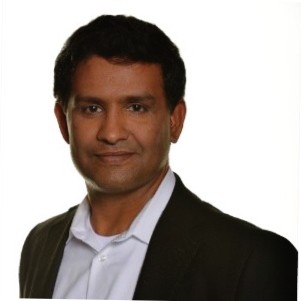
From Supree Periasamy, Head of Charlie Builder

 Growing up in a small village in Tamil Nadu, I remember a man everyone called Kanakka Pillai (கணக்குப் பிள்ளை), the village accountant.

He calculated land and property taxes for five villages. Anyone with a question about numbers or money went to him. That knowledge earned him respect, but also status, influence and power. In a society already divided by class and hierarchy, access to knowledge deepened those divisions, and those without it had little chance to question those who had it.

It wasn’t really about him. It was the system: whoever held the knowledge held the power.
Many organizations still carry a version of that system. Knowledge and expertise influence who gets recognized, who decides, who leads and who follows, and we built structures that often concentrate both toward the top.

The internet democratized information. But information isn’t expertise. AI is beginning to democratize access to expertise itself. People who once had to wait for an expert can now ask questions, explore alternatives, challenge assumptions and apply knowledge directly.

That makes me question something we’ve accepted for decades: the performance pyramid. A few top performers, a larger middle, and some who struggle.

How much of that shape reflects real potential, and how much reflects unequal access to knowledge, tools, guidance and opportunity? I believe much of it is the second. If AI helps close those gaps, we have a real opportunity to invert the pyramid.

What if the goal isn’t just to find the top 20%, but to enable 80% of people to perform at what we consider today’s top-20% level?

People will still differ in skills, experience and motivation. But as access to knowledge becomes less of a differentiator, other qualities matter more: curiosity, critical thinking, creativity, initiative, judgment, and the willingness to question how things have always been done. And we can create environments where those qualities grow.

Traditionally, management structures have helped coordinate work, share expertise, make decisions and provide oversight. As AI enables more people to operate independently, shouldn’t we rethink how those structures create value? Could leadership become less about where someone sits in the pyramid and more about how much potential they unlock in others?

Perhaps the Kanakka Pillai of an AI-first organization isn’t the person everyone has to come to. It’s the person who makes sure no one has to.

In Post #1, I wrote about bootstrapping people to unlock their potential. This is the next step. What if 10x isn’t about making our best performers ten times better, but about unlocking the potential of everyone?

If AI can help 80% of us perform at what we consider today’s top-20% level, should we still be organizing ourselves around the traditional performance pyramid? 

Subscribe to our Weekly Email: